Sunday, July 19, 2020
Answer for Visit to Negeri Sembilan
.
Abu is my friend. He is a smart and cheerful boy.He likes travelling and reading too.
Last week, Abu and his family went to Negeri Sembilan to visit Istana Seri Menanti. It was a wooden building and it was constructed without nails. It was a very unique palace.
Nowadays, the state museum of Negeri Sembilan displays all the exhibits and belongings of the royal family. A tour guide brought them around in the museum.
He left Negeri Sembilan and back to Kuala Lumpur. He enjoyed himself with the trip. Abu suggested to his teacher to organise an education trip to Negeri Sembilan during the school holiday.


Essay writing : A visit to Negeri Sembilan
Dear parents and all students,
There are 8 steps to be followed through in this lesson
STEPS :
1.0 Watch video clip from Youtube,
2.0 Study the pictures and getting to know the keywords.
3.0 Listen to the audio and read along with a passage of story.
4.0 Complete the sentences by filling in the blanks with words.
5.0 Complete the written exercises.
1.0
Watch the video clip below. Get to know about the state of Negeri Sembilan in Malaysia.
2.0
Read the pictures below :

family-Istana Seri Menanti- wooden-
constructed without- nails- palace

now- museum- exhibits- belongings
-royal- tour guide - around
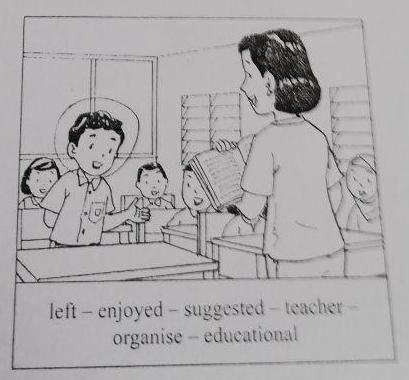
left - enjoyed -suggested - teacher -
organise - educational
3.0
Listen to the audio by clicking the link below, and read along .
(Make sure you have switched on your audio speaker , Choose "Listen in Browser" if you are using mobile-phone)
4.0
Complete the sentences below by listening to the audio again. Do not peep at the answers, try to listen carefully, listen attentively to the audio and complete the task.
Abu is my friend. He is a smart and cheerful boy.He likes travelling and reading too.
Last week, Abu and his _____________ went to Negeri Sembilan to visit _________________. It was a ______ building and it was _________without __________. It was a very unique _____________.
Nowadays, the state museum of Negeri Sembilan displays all the ________________ and _____________of the royal family. A tour guide brought them ____________ in the museum.
He left Negeri Sembilan and back to Kuala Lumpur. He enjoyed himself with the trip. Abu _____________ to his teacher to _______________an ____________trip to Negeri Sembilan during the school holiday.
5.0
Complete the above fill in the blanks exercise.
Please listen to the audio clip in step 3.0 , you can discuss with your family members, your parents , your siblings, or anyone, for the answers.
Still, if you are in doubt. you do not know the answers, you can click the hyperlink below for the complete answer.
Please share this webpage, bit.ly/n9visit to anyone. Sharing is caring.
Do you like this homework? What do you think ? Remember to tell Mr. Goh down here in the comments section. Let's talk about anything down here. I miss you all.
Saturday, July 18, 2020
5ZH Essay , A Visit to Negeri Sembilan
Disca22
Hari Ahad SLOT 2/2
/a22
Class : 5ZH
Date : 19-7-2020
Time : 12.15pm-1.15pm
Remarks :
Essay writing
Hari Ahad SLOT 2/2
/a22
Class : 5ZH
Date : 19-7-2020
Time : 12.15pm-1.15pm
Remarks :
Essay writing
Theme/ Topic : World of knowledge, / Visit to Negeri Sembilan
Skills :
[ ] Listening and Speaking
[ ] Reading
[/ ] Writing
[ ] Grammar
[ ] Language Arts
Contents / Learning stds :
Listening Learning Standards
[ ] 1.1.1 Recognise and reproduce with support a range of target language phonemes
[ ] 1.1.4 Can talk about related topics with a limited words.
[ ] 1.2.1 Understand with support the main idea of short simple texts
[ ] 1.2.2 Understand with support specific information and details of short simple texts
[ ] 1.2.3 Understand with support short simple narratives
[ ] 1.2.4 Understand a wide range of short basic supported classroom instructions
[ ] 1.2.5 Understand a wide range of short supported questions
[ ] 1.3.1 Guess the meaning of unfamiliar words by using visual clues when a teacher or classmate is speaking
Speaking Learning Standards
[ ] 2.1.1 Ask about and express basic opinions
[ ] 2.1.2 Find out about and describe basic everyday routines
[ ] 2.1.3 Give a short sequence of basic directions
[ ] 2.1.4 Ask about, make and respond to simple predictions
[ ] 2.1.5 Describe people and objects using suitable words and phrases
[ ] 2.2.1 Keep interaction going in short exchanges by repeating key words from the other speaker
[ ] 2.2.2 Ask for attention or help from a teacher or classmate by using suitable questions
[ ] 2.3.1 Narrate very short basic stories and events
Reading Learning Standards
[ ] 3.2.1 Understand the main idea of short simple texts
[ ] 3.2.2 Understand specific information and details of short simple texts
[ ] 3.2.4 Recognise and use with support key features of a simple monolingual dictionary
[ ] 3.3.1 Read and enjoy Al fiction/non-fiction print and digital texts of interest
[ ] 3.2.3 Guess the meaning of unfamiliar words from clues provided by visuals and the topic
Writing Learning standards
[/ ] 4.1.2 Begin to use cursive handwriting in a limited range of written work
[ ] 4.2.1 Express simple opinions
[ ] 4.2.2 Make and give reasons for simple predictions
[ ] 4.2.3 Give simple directions
[ ] 4.1.4 Describe people and objects using suitable words and phrases
[ ] 4.2.5 Connect sentences using basic coordinating conjunctions Use capital letters, full stops and question marks appropriately in guided writing at
[/ ] 4.3.1 sentence level
[ ] 4.3.2 Spell an increased range of familiar high frequency words accurately in guided writing
[ ] 4.3.3 Plan, draft and write an increased range of simple sentences
Language Arts Learning Standards
[ ] 5.1.1 Enjoy and appreciate rhymes, poems and songs
[/ ] 5.1.2 Say the words in simple texts, and sing simple songs with intelligible pronunciation, rhythm and intonation:
(1) simple chants and raps (ii) simple rhymes (iii) simple action songs (iv) simple songs (v) simple poems
[ ] 5.2.1 Ask and answer simple questions about characters, actions text and events of interest in a text.
[ ] 5.3.1 Respond imaginatively and intelligibly through creating simple action songs on familiar topics. Other imaginative responses as appropriate.
Objective : At the end of the lesson, pupils are able to ?
Teaching and Learning Strategies :
[ ] 1. Visualization
[ ] 2. Cooperative learning
[/ ] 3. Inquiry-based instruction
[ ] 4. Differentiation
[ ] 5. Technology in the classroom
[ ] 6. Behaviour management
[ ] 7. Professional development
[ ] 8. Project based
[ ] 9. Nil
LEARNING STRATEGIES :
[ ] 1. SQ3R, Survey, Questions,Read,Recall,Review
[ ] 2. double loop learning ( Argyris )
[ ] 3. conversation theory ( Pask)
[ /] 4. lateral thinking ( DeBono )
[ ] 5. social interaction, Situated Learning Theory Weinstein (1991)
[ ] 6. Story Telling & Reading.
[ ] 7. Nil
Teaching and Learning Activities :
1. Picture Cards
2. Worksheets
3. Word cards
Materials / References :
[ ] Textbook
[ ] Workbook
[ ] Internet Search Engine
[ ] Apps / Installed Programmes
[ ] Inquiry, Interview
[ ] Audio CD with player.
[ ] Blank A4 papers, about 100 pcs.
[ /] Worksheets
[ ] Personal organisation
PAK21 elements : -
[ ] Teamwork
[ /] Reasoning
[ ] Proficiency in using technologies
[ ] 3Rs and 4Cs Strong academic skills
[ ] Thinking
[ ] Edutainment
[ ] Search engine and sharing of ideas, data
[ ] language games
[ ] Story telling
[ ] craftwork
• Success Criteria : Pupils used to visit Museum.
Pre-lesson :
1. Pre-teaching, identify unfamiliar words.
2. Get to know the contents of the passage
Lesson development :
1. Read aloud
2. Guess the words.
.
Post-lesson :
Revision, read , revision
EMK (Elemen Merentas Kurikulum) :
Geograpy-going places
MORAL VALUES :
[ ] 1. KINDHEARTEDNESS
[ ] 2. SELF-RELIANCE
[ ] 3. HUMANITY
[ ] 4. MUTUAL RESPECT
[ ] 5. LOVE
[ ] 6. JUSTICE
[ ] 7. FREEDOM
[ ] 8. COURAGE
[ ] 9. CLEANLINESS OF BODY AND MIND
[ ] 10. HONESTY/INTEGRITY
[ ] 11. DILIGENCE
[ ] 12. COOPERATION
[ ]1 3. MODERATION
[/ ] 14. GRATITUDE
[ ] 15. RATIONALITY
[ ] 16. PUBLIC SPIRITEDNESS
[ ] 17. Adaptation
[ ] 18. Time management
I-THINK MAP :
[ ] 1. circle map
[ ] 2.bubble map
[ ] 3.double bubble map
[ ] 4. tree map
[ ] 5. Brace map
[ ] 6. Multiflow map
[ ] 7. Brace map
[ ] 8. Bridge map
[/ ] 9. Nil
THINKING SKILLS
[ /] 1. Make a connection
[ ] 2. Compares and differs
[ ] 3. To clarify
[ ] 4. organize
[ ] 5. Identify true and wrong statements
[ ] 6. Identify statement based on facts and opinions.
[ ] 7. Identify bias statements
[ ] 8. Identify causes and expressing various causes.
[ ] 9. Identify the consequenses and forecast various consequences.
[ ] 10. Make inferences and initial conclusions
[ ] 11. Make generalization and hypotheses.
[ ] 12.Interpreting
[ ] 13. Identify key ideas, support ideas and detailed details.
[ ] 14. Formulate and summarize
[ ] 15. Making decisions.
[ ] 16. Trouble shooting.
[ ] Others : Repetition is the key fluency.
MULTIPLE INTELLIGENCE :
[/ ] 1.Linguistic intelligence (“word smart”)
[ ] 2.Spatial intelligence (“picture smart”)
[ ] 3. Musical intelligence (“music smart”)
[ ] 4. Bodily-Kinesthetics intelligence (“body smart”)
[ ] 5. Naturalist intelligence (“nature smart”)
[ ] 6. Logical-mathematical intelligence (“number/reasoning smart”)
[ ] 7. Interpersonal intelligence (“people smart”)
Assessment :
1. Written works / Worksheets:
Essay
2. Teacher's Observations : Kids - Complete task as given
3. Practical Works :
-
4. Questions / Quizzes :
Some Wh questions asked verbally, to stir-up, to motivate thinking, to think hard.
Reflections/Impact :
...Iearning is useful, for enhancing learning capabilities.
Blog :
bit.ly/5zhnsembilan
Remedial / Enrichment :
Guidance is given to the below average group, by teacher's help, personally
****************************************************
Skills :
[ ] Listening and Speaking
[ ] Reading
[/ ] Writing
[ ] Grammar
[ ] Language Arts
Contents / Learning stds :
Listening Learning Standards
[ ] 1.1.1 Recognise and reproduce with support a range of target language phonemes
[ ] 1.1.4 Can talk about related topics with a limited words.
[ ] 1.2.1 Understand with support the main idea of short simple texts
[ ] 1.2.2 Understand with support specific information and details of short simple texts
[ ] 1.2.3 Understand with support short simple narratives
[ ] 1.2.4 Understand a wide range of short basic supported classroom instructions
[ ] 1.2.5 Understand a wide range of short supported questions
[ ] 1.3.1 Guess the meaning of unfamiliar words by using visual clues when a teacher or classmate is speaking
Speaking Learning Standards
[ ] 2.1.1 Ask about and express basic opinions
[ ] 2.1.2 Find out about and describe basic everyday routines
[ ] 2.1.3 Give a short sequence of basic directions
[ ] 2.1.4 Ask about, make and respond to simple predictions
[ ] 2.1.5 Describe people and objects using suitable words and phrases
[ ] 2.2.1 Keep interaction going in short exchanges by repeating key words from the other speaker
[ ] 2.2.2 Ask for attention or help from a teacher or classmate by using suitable questions
[ ] 2.3.1 Narrate very short basic stories and events
Reading Learning Standards
[ ] 3.2.1 Understand the main idea of short simple texts
[ ] 3.2.2 Understand specific information and details of short simple texts
[ ] 3.2.4 Recognise and use with support key features of a simple monolingual dictionary
[ ] 3.3.1 Read and enjoy Al fiction/non-fiction print and digital texts of interest
[ ] 3.2.3 Guess the meaning of unfamiliar words from clues provided by visuals and the topic
Writing Learning standards
[/ ] 4.1.2 Begin to use cursive handwriting in a limited range of written work
[ ] 4.2.1 Express simple opinions
[ ] 4.2.2 Make and give reasons for simple predictions
[ ] 4.2.3 Give simple directions
[ ] 4.1.4 Describe people and objects using suitable words and phrases
[ ] 4.2.5 Connect sentences using basic coordinating conjunctions Use capital letters, full stops and question marks appropriately in guided writing at
[/ ] 4.3.1 sentence level
[ ] 4.3.2 Spell an increased range of familiar high frequency words accurately in guided writing
[ ] 4.3.3 Plan, draft and write an increased range of simple sentences
Language Arts Learning Standards
[ ] 5.1.1 Enjoy and appreciate rhymes, poems and songs
[/ ] 5.1.2 Say the words in simple texts, and sing simple songs with intelligible pronunciation, rhythm and intonation:
(1) simple chants and raps (ii) simple rhymes (iii) simple action songs (iv) simple songs (v) simple poems
[ ] 5.2.1 Ask and answer simple questions about characters, actions text and events of interest in a text.
[ ] 5.3.1 Respond imaginatively and intelligibly through creating simple action songs on familiar topics. Other imaginative responses as appropriate.
Objective : At the end of the lesson, pupils are able to ?
Teaching and Learning Strategies :
[ ] 1. Visualization
[ ] 2. Cooperative learning
[/ ] 3. Inquiry-based instruction
[ ] 4. Differentiation
[ ] 5. Technology in the classroom
[ ] 6. Behaviour management
[ ] 7. Professional development
[ ] 8. Project based
[ ] 9. Nil
LEARNING STRATEGIES :
[ ] 1. SQ3R, Survey, Questions,Read,Recall,Review
[ ] 2. double loop learning ( Argyris )
[ ] 3. conversation theory ( Pask)
[ /] 4. lateral thinking ( DeBono )
[ ] 5. social interaction, Situated Learning Theory Weinstein (1991)
[ ] 6. Story Telling & Reading.
[ ] 7. Nil
Teaching and Learning Activities :
1. Picture Cards
2. Worksheets
3. Word cards
Materials / References :
[ ] Textbook
[ ] Workbook
[ ] Internet Search Engine
[ ] Apps / Installed Programmes
[ ] Inquiry, Interview
[ ] Audio CD with player.
[ ] Blank A4 papers, about 100 pcs.
[ /] Worksheets
[ ] Personal organisation
PAK21 elements : -
[ ] Teamwork
[ /] Reasoning
[ ] Proficiency in using technologies
[ ] 3Rs and 4Cs Strong academic skills
[ ] Thinking
[ ] Edutainment
[ ] Search engine and sharing of ideas, data
[ ] language games
[ ] Story telling
[ ] craftwork
• Success Criteria : Pupils used to visit Museum.
Pre-lesson :
1. Pre-teaching, identify unfamiliar words.
2. Get to know the contents of the passage
Lesson development :
1. Read aloud
2. Guess the words.
.
Post-lesson :
Revision, read , revision
EMK (Elemen Merentas Kurikulum) :
Geograpy-going places
MORAL VALUES :
[ ] 1. KINDHEARTEDNESS
[ ] 2. SELF-RELIANCE
[ ] 3. HUMANITY
[ ] 4. MUTUAL RESPECT
[ ] 5. LOVE
[ ] 6. JUSTICE
[ ] 7. FREEDOM
[ ] 8. COURAGE
[ ] 9. CLEANLINESS OF BODY AND MIND
[ ] 10. HONESTY/INTEGRITY
[ ] 11. DILIGENCE
[ ] 12. COOPERATION
[ ]1 3. MODERATION
[/ ] 14. GRATITUDE
[ ] 15. RATIONALITY
[ ] 16. PUBLIC SPIRITEDNESS
[ ] 17. Adaptation
[ ] 18. Time management
I-THINK MAP :
[ ] 1. circle map
[ ] 2.bubble map
[ ] 3.double bubble map
[ ] 4. tree map
[ ] 5. Brace map
[ ] 6. Multiflow map
[ ] 7. Brace map
[ ] 8. Bridge map
[/ ] 9. Nil
THINKING SKILLS
[ /] 1. Make a connection
[ ] 2. Compares and differs
[ ] 3. To clarify
[ ] 4. organize
[ ] 5. Identify true and wrong statements
[ ] 6. Identify statement based on facts and opinions.
[ ] 7. Identify bias statements
[ ] 8. Identify causes and expressing various causes.
[ ] 9. Identify the consequenses and forecast various consequences.
[ ] 10. Make inferences and initial conclusions
[ ] 11. Make generalization and hypotheses.
[ ] 12.Interpreting
[ ] 13. Identify key ideas, support ideas and detailed details.
[ ] 14. Formulate and summarize
[ ] 15. Making decisions.
[ ] 16. Trouble shooting.
[ ] Others : Repetition is the key fluency.
MULTIPLE INTELLIGENCE :
[/ ] 1.Linguistic intelligence (“word smart”)
[ ] 2.Spatial intelligence (“picture smart”)
[ ] 3. Musical intelligence (“music smart”)
[ ] 4. Bodily-Kinesthetics intelligence (“body smart”)
[ ] 5. Naturalist intelligence (“nature smart”)
[ ] 6. Logical-mathematical intelligence (“number/reasoning smart”)
[ ] 7. Interpersonal intelligence (“people smart”)
Assessment :
1. Written works / Worksheets:
Essay
2. Teacher's Observations : Kids - Complete task as given
3. Practical Works :
-
4. Questions / Quizzes :
Some Wh questions asked verbally, to stir-up, to motivate thinking, to think hard.
Reflections/Impact :
...Iearning is useful, for enhancing learning capabilities.
Blog :
bit.ly/5zhnsembilan
Remedial / Enrichment :
Guidance is given to the below average group, by teacher's help, personally
****************************************************
Wednesday, July 15, 2020
5ZH 1st lesson after MCO
DiscK22
.
Hari Khamis SLOT 2/2
/k22
Class : 5ZH
Date : 16-7-2020
Time : 9.45am-10.45am
Remarks : First lesson after MCO.
Tips of handling face mask.
Theme/ Topic : World of knowledge, New norm, new practise in the time of Covid-19 pandemic.
Skills :
[ /] Listening and Speaking
[ ] Reading
[ ] Writing
[ ] Grammar
[ ] Language Arts
Contents / Learning stds :
Listening Learning Standards
[ ] 1.1.1 Recognise and reproduce with support a range of target language phonemes
[/ ] 1.1.4 Can talk about related topics with a limited words.
[ ] 1.2.1 Understand with support the main idea of short simple texts
[ ] 1.2.2 Understand with support specific information and details of short simple texts
[ ] 1.2.3 Understand with support short simple narratives
[ ] 1.2.4 Understand a wide range of short basic supported classroom instructions
[ ] 1.2.5 Understand a wide range of short supported questions
[ ] 1.3.1 Guess the meaning of unfamiliar words by using visual clues when a teacher or classmate is speaking
Speaking Learning Standards
[/ ] 2.1.1 Ask about and express basic opinions
[ ] 2.1.2 Find out about and describe basic everyday routines
[ ] 2.1.3 Give a short sequence of basic directions
[ ] 2.1.4 Ask about, make and respond to simple predictions
[ ] 2.1.5 Describe people and objects using suitable words and phrases
[ ] 2.2.1 Keep interaction going in short exchanges by repeating key words from the other speaker
[ ] 2.2.2 Ask for attention or help from a teacher or classmate by using suitable questions
[ ] 2.3.1 Narrate very short basic stories and events
Reading Learning Standards
[ ] 3.2.1 Understand the main idea of short simple texts
[ ] 3.2.2 Understand specific information and details of short simple texts
[ ] 3.2.4 Recognise and use with support key features of a simple monolingual dictionary
[ ] 3.3.1 Read and enjoy Al fiction/non-fiction print and digital texts of interest
[ ] 3.2.3 Guess the meaning of unfamiliar words from clues provided by visuals and the topic
Writing Learning standards
[ ] 4.1.2 Begin to use cursive handwriting in a limited range of written work
[ ] 4.2.1 Express simple opinions
[ ] 4.2.2 Make and give reasons for simple predictions
[ ] 4.2.3 Give simple directions
[ ] 4.1.4 Describe people and objects using suitable words and phrases
[ ] 4.2.5 Connect sentences using basic coordinating conjunctions Use capital letters, full stops and question marks appropriately in guided writing at
[ ] 4.3.1 sentence level
[ ] 4.3.2 Spell an increased range of familiar high frequency words accurately in guided writing
[ ] 4.3.3 Plan, draft and write an increased range of simple sentences
Language Arts Learning Standards
[ ] 5.1.1 Enjoy and appreciate rhymes, poems and songs
[ ] 5.1.2 Say the words in simple texts, and sing simple songs with intelligible pronunciation, rhythm and intonation:
(1) simple chants and raps (ii) simple rhymes (iii) simple action songs (iv) simple songs (v) simple poems
[ ] 5.2.1 Ask and answer simple questions about characters, actions text and events of interest in a text.
[ ] 5.3.1 Respond imaginatively and intelligibly through creating simple action songs on familiar topics. Other imaginative responses as appropriate.
Objective : At the end of the lesson, pupils are able to ?
Teaching and Learning Strategies :
[ ] 1. Visualization
[ ] 2. Cooperative learning
[ ] 3. Inquiry-based instruction
[ ] 4. Differentiation
[ ] 5. Technology in the classroom
[ /] 6. Behaviour management
[ ] 7. Professional development
[ ] 8. Project based
[ ] 9. Nil
LEARNING STRATEGIES :
[ ] 1. SQ3R, Survey, Questions,Read,Recall,Review
[ ] 2. double loop learning ( Argyris )
[/ ] 3. conversation theory ( Pask)
[ ] 4. lateral thinking ( DeBono )
[ ] 5. social interaction, Situated Learning Theory Weinstein (1991)
[ ] 6. Story Telling & Reading.
[ ] 7. Nil
Teaching and Learning Activities :
1. Story of virus
2. War on virus-personal hygiene
3. How to put on mask & tips of disposal & Usage
Materials / References :
[ ] Textbook
[ ] Workbook
[ ] Internet Search Engine
[ ] Apps / Installed Programmes
[ /] Inquiry, Interview
[ ] Audio CD with player.
[ ] Blank A4 papers, about 100 pcs.
[ ] Worksheets
[ ] Personal organisation
PAK21 elements : -
[ ] Teamwork
[ /] Reasoning
[ ] Proficiency in using technologies
[ ] 3Rs and 4Cs Strong academic skills
[ ] Thinking
[ ] Edutainment
[ ] Search engine and sharing of ideas, data
[ ] language games
[ ] Story telling
[ ] craftwork
• Success Criteria : Pupils listen attentively and talk about their own experience of handling mask, sanitizer.
Pre-lesson :
Wear mask, wrongly & correctly.
Lesson development :
1. Show example, demon of wearing mask
2. Pupils imitate & practice.
.
Post-lesson :
Eat in the class.
EMK (Elemen Merentas Kurikulum) :
PJK, Health Science
MORAL VALUES :
[ ] 1. KINDHEARTEDNESS
[ ] 2. SELF-RELIANCE
[ ] 3. HUMANITY
[ ] 4. MUTUAL RESPECT
[ ] 5. LOVE
[ ] 6. JUSTICE
[ ] 7. FREEDOM
[ ] 8. COURAGE
[ /] 9. CLEANLINESS OF BODY AND MIND
[ ] 10. HONESTY/INTEGRITY
[ ] 11. DILIGENCE
[ ] 12. COOPERATION
[ ]1 3. MODERATION
[ ] 14. GRATITUDE
[ ] 15. RATIONALITY
[ ] 16. PUBLIC SPIRITEDNESS
[ ] 17. Adaptation
[ ] 18. Time management
I-THINK MAP :
[ ] 1. circle map
[ ] 2.bubble map
[ ] 3.double bubble map
[ ] 4. tree map
[ ] 5. Brace map
[ /] 6. Multiflow map, hand washing steps.
[ ] 7. Brace map
[ ] 8. Bridge map
[ ] 9. Nil
THINKING SKILLS
[ ] 1. Make a connection
[ ] 2. Compares and differs
[ ] 3. To clarify
[ ] 4. organize
[ ] 5. Identify true and wrong statements
[ ] 6. Identify statement based on facts and opinions.
[ ] 7. Identify bias statements
[ /] 8. Identify causes and expressing various causes.
[ ] 9. Identify the consequenses and forecast various consequences.
[ ] 10. Make inferences and initial conclusions
[ ] 11. Make generalization and hypotheses.
[ ] 12.Interpreting
[ ] 13. Identify key ideas, support ideas and detailed details.
[ ] 14. Formulate and summarize
[ ] 15. Making decisions.
[ ] 16. Trouble shooting.
[ ] Others : Repetition is the key fluency.
MULTIPLE INTELLIGENCE :
[ ] 1.Linguistic intelligence (“word smart”)
[ /] 2.Spatial intelligence (“picture smart”)
[ ] 3. Musical intelligence (“music smart”)
[ ] 4. Bodily-Kinesthetics intelligence (“body smart”)
[ ] 5. Naturalist intelligence (“nature smart”)
[ ] 6. Logical-mathematical intelligence (“number/reasoning smart”)
[ ] 7. Interpersonal intelligence (“people smart”)
Assessment :
1. Written works / Worksheets:
-Nil
2. Teacher's Observations : Kids imitate & practice best hygienic measures.
3. Practical Works :
Hand washing.
4. Questions / Quizzes :
Some Wh questions asked verbally, to stir-up, to motivate thinking, to think hard.
Reflections/Impact :
Practical learning on hygienic practices are useful, for enhancing learning capabilities.
Blog :
bit.ly/5zhsop
Remedial / Enrichment :
Guidance is given to the below average group, by teacher's help, personally
****************************************************
.
Hari Khamis SLOT 2/2
/k22
Class : 5ZH
Date : 16-7-2020
Time : 9.45am-10.45am
Remarks : First lesson after MCO.
Tips of handling face mask.
Theme/ Topic : World of knowledge, New norm, new practise in the time of Covid-19 pandemic.
Skills :
[ /] Listening and Speaking
[ ] Reading
[ ] Writing
[ ] Grammar
[ ] Language Arts
Contents / Learning stds :
Listening Learning Standards
[ ] 1.1.1 Recognise and reproduce with support a range of target language phonemes
[/ ] 1.1.4 Can talk about related topics with a limited words.
[ ] 1.2.1 Understand with support the main idea of short simple texts
[ ] 1.2.2 Understand with support specific information and details of short simple texts
[ ] 1.2.3 Understand with support short simple narratives
[ ] 1.2.4 Understand a wide range of short basic supported classroom instructions
[ ] 1.2.5 Understand a wide range of short supported questions
[ ] 1.3.1 Guess the meaning of unfamiliar words by using visual clues when a teacher or classmate is speaking
Speaking Learning Standards
[/ ] 2.1.1 Ask about and express basic opinions
[ ] 2.1.2 Find out about and describe basic everyday routines
[ ] 2.1.3 Give a short sequence of basic directions
[ ] 2.1.4 Ask about, make and respond to simple predictions
[ ] 2.1.5 Describe people and objects using suitable words and phrases
[ ] 2.2.1 Keep interaction going in short exchanges by repeating key words from the other speaker
[ ] 2.2.2 Ask for attention or help from a teacher or classmate by using suitable questions
[ ] 2.3.1 Narrate very short basic stories and events
Reading Learning Standards
[ ] 3.2.1 Understand the main idea of short simple texts
[ ] 3.2.2 Understand specific information and details of short simple texts
[ ] 3.2.4 Recognise and use with support key features of a simple monolingual dictionary
[ ] 3.3.1 Read and enjoy Al fiction/non-fiction print and digital texts of interest
[ ] 3.2.3 Guess the meaning of unfamiliar words from clues provided by visuals and the topic
Writing Learning standards
[ ] 4.1.2 Begin to use cursive handwriting in a limited range of written work
[ ] 4.2.1 Express simple opinions
[ ] 4.2.2 Make and give reasons for simple predictions
[ ] 4.2.3 Give simple directions
[ ] 4.1.4 Describe people and objects using suitable words and phrases
[ ] 4.2.5 Connect sentences using basic coordinating conjunctions Use capital letters, full stops and question marks appropriately in guided writing at
[ ] 4.3.1 sentence level
[ ] 4.3.2 Spell an increased range of familiar high frequency words accurately in guided writing
[ ] 4.3.3 Plan, draft and write an increased range of simple sentences
Language Arts Learning Standards
[ ] 5.1.1 Enjoy and appreciate rhymes, poems and songs
[ ] 5.1.2 Say the words in simple texts, and sing simple songs with intelligible pronunciation, rhythm and intonation:
(1) simple chants and raps (ii) simple rhymes (iii) simple action songs (iv) simple songs (v) simple poems
[ ] 5.2.1 Ask and answer simple questions about characters, actions text and events of interest in a text.
[ ] 5.3.1 Respond imaginatively and intelligibly through creating simple action songs on familiar topics. Other imaginative responses as appropriate.
Objective : At the end of the lesson, pupils are able to ?
Teaching and Learning Strategies :
[ ] 1. Visualization
[ ] 2. Cooperative learning
[ ] 3. Inquiry-based instruction
[ ] 4. Differentiation
[ ] 5. Technology in the classroom
[ /] 6. Behaviour management
[ ] 7. Professional development
[ ] 8. Project based
[ ] 9. Nil
LEARNING STRATEGIES :
[ ] 1. SQ3R, Survey, Questions,Read,Recall,Review
[ ] 2. double loop learning ( Argyris )
[/ ] 3. conversation theory ( Pask)
[ ] 4. lateral thinking ( DeBono )
[ ] 5. social interaction, Situated Learning Theory Weinstein (1991)
[ ] 6. Story Telling & Reading.
[ ] 7. Nil
Teaching and Learning Activities :
1. Story of virus
2. War on virus-personal hygiene
3. How to put on mask & tips of disposal & Usage
Materials / References :
[ ] Textbook
[ ] Workbook
[ ] Internet Search Engine
[ ] Apps / Installed Programmes
[ /] Inquiry, Interview
[ ] Audio CD with player.
[ ] Blank A4 papers, about 100 pcs.
[ ] Worksheets
[ ] Personal organisation
PAK21 elements : -
[ ] Teamwork
[ /] Reasoning
[ ] Proficiency in using technologies
[ ] 3Rs and 4Cs Strong academic skills
[ ] Thinking
[ ] Edutainment
[ ] Search engine and sharing of ideas, data
[ ] language games
[ ] Story telling
[ ] craftwork
• Success Criteria : Pupils listen attentively and talk about their own experience of handling mask, sanitizer.
Pre-lesson :
Wear mask, wrongly & correctly.
Lesson development :
1. Show example, demon of wearing mask
2. Pupils imitate & practice.
.
Post-lesson :
Eat in the class.
EMK (Elemen Merentas Kurikulum) :
PJK, Health Science
MORAL VALUES :
[ ] 1. KINDHEARTEDNESS
[ ] 2. SELF-RELIANCE
[ ] 3. HUMANITY
[ ] 4. MUTUAL RESPECT
[ ] 5. LOVE
[ ] 6. JUSTICE
[ ] 7. FREEDOM
[ ] 8. COURAGE
[ /] 9. CLEANLINESS OF BODY AND MIND
[ ] 10. HONESTY/INTEGRITY
[ ] 11. DILIGENCE
[ ] 12. COOPERATION
[ ]1 3. MODERATION
[ ] 14. GRATITUDE
[ ] 15. RATIONALITY
[ ] 16. PUBLIC SPIRITEDNESS
[ ] 17. Adaptation
[ ] 18. Time management
I-THINK MAP :
[ ] 1. circle map
[ ] 2.bubble map
[ ] 3.double bubble map
[ ] 4. tree map
[ ] 5. Brace map
[ /] 6. Multiflow map, hand washing steps.
[ ] 7. Brace map
[ ] 8. Bridge map
[ ] 9. Nil
THINKING SKILLS
[ ] 1. Make a connection
[ ] 2. Compares and differs
[ ] 3. To clarify
[ ] 4. organize
[ ] 5. Identify true and wrong statements
[ ] 6. Identify statement based on facts and opinions.
[ ] 7. Identify bias statements
[ /] 8. Identify causes and expressing various causes.
[ ] 9. Identify the consequenses and forecast various consequences.
[ ] 10. Make inferences and initial conclusions
[ ] 11. Make generalization and hypotheses.
[ ] 12.Interpreting
[ ] 13. Identify key ideas, support ideas and detailed details.
[ ] 14. Formulate and summarize
[ ] 15. Making decisions.
[ ] 16. Trouble shooting.
[ ] Others : Repetition is the key fluency.
MULTIPLE INTELLIGENCE :
[ ] 1.Linguistic intelligence (“word smart”)
[ /] 2.Spatial intelligence (“picture smart”)
[ ] 3. Musical intelligence (“music smart”)
[ ] 4. Bodily-Kinesthetics intelligence (“body smart”)
[ ] 5. Naturalist intelligence (“nature smart”)
[ ] 6. Logical-mathematical intelligence (“number/reasoning smart”)
[ ] 7. Interpersonal intelligence (“people smart”)
Assessment :
1. Written works / Worksheets:
-Nil
2. Teacher's Observations : Kids imitate & practice best hygienic measures.
3. Practical Works :
Hand washing.
4. Questions / Quizzes :
Some Wh questions asked verbally, to stir-up, to motivate thinking, to think hard.
Reflections/Impact :
Practical learning on hygienic practices are useful, for enhancing learning capabilities.
Blog :
bit.ly/5zhsop
Remedial / Enrichment :
Guidance is given to the below average group, by teacher's help, personally
****************************************************
Friday, June 19, 2020
Kamus Loghat Terengganu
Kembali ke
Morten's Dictionaries Homepage
BAHASA TERENGGANU
Kamus Bahasa Tranung Bahasa Tranung --> Bahasa Melayu
.
A
agah/gong - mendabik dada/sombong
alik – asal/ belah mana
aloh – kalah/ beralah
ambak – perambat/ kejar
ane – di mana
arik - tidur-tidur ayam
arong - separuh masak
atek - juga (Ambe nokgi atek. / Saya hendak pergi juga.)
ateng – menumpang
au/ ahu – tahu
awang - panggilan hormat utk jejaka/kanak2 lelaki
B
bahang – baham
baber/ babir/ babil - degil
ballik paih - songsang/ terbalik
baloh – gaduh
banyok akallang/ reddi - banyak karenah l
bapak - jaguh
baruh - sawah
basak ttere - sangat miskin/papa kedana
basah jojoh - basah kuyup
basi ro'i - cerita berulang ulang
batil/ bata - bantal
bawok - bawa
bbachor-merapu/merepek
bbekok – pendam rasa
bberek – sepanjang masa ~ hujan tak henti2 sejak pagi
bbokeh - terpongkes
bbolog arog/bbolok wok - bersimpul simpul
bbolok wok - cakap tidak jelas/berbelit2
bbojeng1 - gunting rambut~nok gi bbojeng eh ekgi..panjang orh rambut
bbojeng2/bjjangok - remos ~ sikat rambut biar rapi
bedooh - lebih2
behhe - bengkak kecil akibat gigitan serangga
bejujuk - berduyun duyun/bederet-deret
bekki - baiki
bekok – bengkak
bekok ccobong - bengkak berbenjol
bekok keng - penyakit beguk / bengkak dekat rahang/pipi
bekok minyyok - bengkak merening
bekwoh – kenduri besar
belage keng - bertengkar/ bergaduh~perang mulut
belang belang mmecok - buat kerja sambil lepaskan geram
belebe/bleber/ bbabeh - berleter
belembang - bertakung (air,darah,dsb)
belohok - tersedak
beng - jangan
beradong/beraluh - proper/kerje kemas
berat nanang - sukar lagi menyusahkan @ sangat berat
berdeccung / lari laju berdecung/ lari cak rappok – lari teramat laju
berderohong – bunyi yang kuat
berdoho (leloh berdoho) – penat lelah
bere - malu/jatuh air muka
berjejeh – meleleh
berlendir taber - sangat berlendir dan melekit
berlewe-lewe' -
berra – hancur
bere - malu
berreh – beres
berrong1- bunyi seakan2 berdengung~bunyi lebah terbang banyak
berrong2 - keadaan yg banyak spt dihurungi semut
bersauk sandang - bersangkut2 dalam keadaan kusut~benang kusut
berseranggoh woh - berserabut / keadaan yang tidak teratur
bese (e pertama e tanda) - selalu kencing
besor jjalo - besar panjang
betak - lambat
bicuk - bengkak kecil di dahi atau kepala
bilorr - lebam akibat dirotan
birra - tepi
bising bango - riuh rendah/ hiruk pikuk
blekosawo - silang-menyilang, berpintal
boh – boss
bodo sombong - bodoh yg tak boleh diajar
bolle – tidur mati
bollok - bercampur baur
bong1 - sjenis alat untuk kopek kelapa (yg pacak atas tanah)
bong2 - hub ~pada roda motosikal ada bsikal
bong3 - nombor blakang2 ~mung blh no bong sokmo kalu prekse..malah bbace epong
bujjil/ pusat bujjil - pusat yang tersembul keluar
bulat getel - bulat berbutir, sengaja dibulatkan
burok pok - sangat usang
busuk bbangor - sangat busuk
busuk kohong - tersangat busuk
buwak – buat
buwi/bui/v – beri
C
caccang – tegak/ berdiri
cahligas - aktif/lasak
ccacing - kurus/halus
cakduh - terburu-buru
cakak1 - cakap
cakak/rok - mampu(mampu dalam bentuk tenaga)/larat
cakkung - duduk seperti membuang air besar ~ ttinggong
cakne - perihatin/peka
camba war - cacamarba / bercampur-aduk
cammek - suka menyibuk
cappur bimbor - cacamarba/bercampur-aduk
catuk - patuk / mematuk
cebok1 - baham
cebok2 - ceduk air
ceddung - tanam padi
cekgu/muk2 - sejenis serangga dlm pasir ~tangkap guna rambut
cekik1 - cubit menggunakn kuku keatas kulit
cekik2 - cubit dgn cekik leher ejaang sama tp bunyi lain (nyekik)
cekoh - kopek/mengopek..*ce cekoh durian tu nk makang ning..
cemir/kesek - mata tercedera bagi sebelah mata je
cemok-cemok - cukup cukup
cerah dderang - terang benderang
ceretek - kedudukan berselerak
cerlang creluk - sekejap ada sekejap tiada
cerlong – pandangan yang tajam spt nak makan orang
chor - air buangan dr singki yg bertakung
cike - cerek berek
cokang cemaking - tunggang langgang/ tidak teratur dan tersusun
cokeh - cungkil
cokkeng - keras/tegak
collek – cicah/pencicah
comel lote - cantik/kiut/kecil molek
congok/ccongok – tercegat/ cangkung
cottek arek - berselerakan ~becotek arek gelah atah meja..
culah - malas, liat
D
dakper – tidak mengapa
dane/ duaner – di mana
dang - sempat
Contoh ayat : Dang lagi sampai kalu kite laghi? (Sempat lagi kita sampai kalau kita lari)
daba baju - kolar baju
debok - memukul di atas belakang
deccok - melompat dengan satu kaki ke atas dan satu lagi ke bawah
dderak/doktong - keluar rumah berjalan2 tanpa tujuan ~Doh mung gi dderak mana Awang sari tumbah dok balik rumoh
dedeh (e pertama tanda, e kedua tiada tanda) - kikis sehingga habis
deh - dedah
dek-eh1 - tadok gok
dek-eh2- letih, penat
dekkor - pandai berlakon / berpura-pura
dendeng - menghalang/ hadang dengan tirai/kain/langsir
deretoh,boley,beccok,derloh - tidur
dinung – sana nun
dodoh1 - lerai/pisahkan isi dan tulang
dodoh2/ dedeh - siat kulit, makanan terdedah
dok/ dop – tidak
dokkang – takkan
dokkek - tertusuk
doklei - tak boleh
doktong - pergi berjalan-jalan
dok cakak - tak mampu/tak berupaya
dok cakak weh - tak larat
dok cemok mane teh - tak banyak mana pun
dok dang nok ambak - tidak sampat kejar
dok dang starang - tak sempat juga
dok degih - tidak memberi kesan~dok degih langsung aku tolok bas tadi
dok dek eh - tidak dalam erti kata bersungguh2
dok 'eh - taklah
dok guane mane 'eh - tak ada apa-apalah
dok kelulu - perangai tak elok
dok kettek (e pertama e tanda) - tiada tindakbalas
dok kuane mane 'eh - tak kemana-manalah
dok mung arr - tidak kau sorang ar
dok paka - tak pakai , tidak berguna
dok pakka - tidak berguna
dok padan ke mende - tak setara dengan benda
dok padedolah - dah tak boleh nak buat apa dah
dok paka sikit habuk - tak berguna langsung
dok paka gawa - sudah tidak boleh digunakan
dok ppaka siket arang - tak berguna langsung
dok rok cettong – tidak boleh diharap ~koman spanar
dok rok starang baroh - tak mampu sungguh
dok ssaboh/dok song - tidak munasabah, tidak masuk akal
dok ssele – duduk sila
dok soh tebenglah - tak usah paksalah
doh ye ahhh - ya lah.. agak biasa digunakan dalam perbualan harian
dono por/berlembang/kucar lanar - huru hara/ kacau bilau
driang - durian
duaner/ kuaner - bagaimana
E
enggok - tertangguh / tak jadi
enjek - (taktau makna) cth ayat..ek eleh enjek nya
enjeng – menjinjing, menjinjit
erong – trim ~ potong/gunting bagi sama
erot ttepang/ reyok belepang - bengkang-bengkok
etek – juga
epek ele - sjenis makanan rasenye
G
gaga - gagau/mencapai/meraba
gapodio ? - apa dia ? (What's up?)
gajoh rima - tak boleh lawan/ apa benda sekalipun
galla - membajak
gandeng1- pukul/ketuk/ baling
gandeng2 - batang kayu yg dijadikan gandeng utk pukul/ ketuk lembu
garib – maghrib
geddik - mintak
gelap gelemat - gelap hitam pekat
gelaluk - menyibuk
gelasok1 – terperosok
gelasok2 - tergelincir
gelecoh - gelincir
geli gelemang - geli hingga menusuk perasaan
geliok geliok - sejenis pergerakan ~ ikang keli geliok geliok gerok
gelenyeh - gatal/ tumpul
geletik – gelenyar/ gatai
gelonggong/geronggong - berongga/berlubang
gemok gedebok - gemuk gedempul
gemok-debok - gemok gedempol
ggegih - jejas, tak mudah musnah
ggorek-pengasah pensil
giane - pergi mana ?
Contoh ayat : Munak giane ? (Kamu hendak pergi mana ?)
gleding-geliok - sukar lidah bercakap
glekek - ketawa spt langsuir menangis
glewak/ gelewak – buat serabut , menyibuk
glomok – tiada makna ~ glomok abih budak ..
goccoh, gomo, bretak, sigung – gaduh/ lawan
godang - pukul
gok - reban
gong1 - bangga diri
gong2 - tanah tinggi
guane - Bagaimana ?
Contoh ayat : Guanemu ? (Bagaimanakah keadaan anda sekarang?)
gula – gulai
gurra – gurau
H/I
hanyir kohong - tersangat busuk
hija menaung - terlalu hijau
hitam bletung - hitam legam
hodoh ssepang - teramat hodoh
hujoh - hujah
hungga - berlari menuju
ikang aye - ikan tuna/tongkol
isih - asingkan
J
jaber/jobeng/rajuk/kadut/supik - plastik beg
jak1/ smeto – tunggu sekejap
jak2 - semenjak~singkatan jak sahaja
jak3 - bekas air ~ jug
jambu golok-buah gajus
jangok – berhias / bergaya
jatang – jantan
jauh dennak/jauh jennat - teramat jauh
jawwe (bunyi e tanda) - tidak bertegur sapa/masam muka
jebbek - raut muka yang sedih dan sugul
jek1 - terajang, flying kick
jek2 - bodek, ampu
jelire - sedap/nyaman
jeluok/jelanok - muntah
jemba/jembe - menerpa
jembeng/cibik1 - bawa ~tolong gok jembeng/cibik bakul rotan tu
jembeng2 - pulas/cubit ~ sakit ngguh ustaz jembeng telinga ambe tadi
jeng1 - rosak
jeng2 - jln jem
jeng3 - jem
jenere - mulai tidur
jepput - cekodok tepung
jereba – merebahkan diri seolah untuk menangkap sesuatu spt penjaga gol hendak menangkap bola
jerenggeng - baring mengiring (biasanya tangan mengampu kepala)
jing tending - duduk jauh dgn orang
jirek - pijak
jok - bakul besar penuh isi buah durian dsb
jong perubak - tukang mengubatkan
jjokey - ujung2
jula - dahan
jupper – jumpa
juwweng - bertegur sapa ~dok juwweng/ tidak bertegur sapa
K
kabak – panjat
kabbe - terperanjat
kaca - ganggu
kagha/polek - tarik tali ~ kagha lah wa tu,garik doh ning
kalli – sekali
kalang - pensil
kalih - biasa / mangli
kanjar - terperanjat
kapong - kampong
karat ddekuh - terlalu kedekut, bakhil
karih - kacau dan gaul biasa ketika nasi nak kering air
kattang – berotot
kecik tuik - kecil sangat
kecok - tempang
kecoh-kecoh - bising
keccong (e tanda ) - terpedaya / tertipu
kejong - berkas
kekkeng - kangkang / terkangkang
kekoh - gigit
kekgi – nanti
kekkeng soyyok - terkangkang / terbuka
kekkok - bengkok
kekoh - gigit
kelebek/ klebek – membelek/ tercari-cari
kellang - tercekik
kelleng/ skeleng - syiling
kelih wok tang - tengok tu
kelo kelo – kelui/ panggil
kelolor/ nollor - lucu
kemam - kebam/ hisap dalam mulut
keming – kemas lagi
kemoh keming - tersusun kemas
kenayak – khianat
kenaling - berdebar/lemah lesu/ taksedap badan
kenak - meja bulat biasa ada cermin diatas
keng1 - tulang pipi
keng2 - tengkok~biasanya hok kite dengor, kerah keng ngan bekok keng
keng3 - rahang..makang tebu tadi..saloh kekoh..belok keng
kenge (dua2 tiada e tanda) - lemah / tak pandai/ tak mahir
kenyang blana - dah kenyang dah..
kenyek – hancurkan ~ tumbuk lada bagi hancur
kepoh1/kupit - kedekut/ bakhil/ tangkai jering
kepoh2 - gigit sampai hancur ~ hingga ke tulang ayam aku kepoh
kepok (sebutan bukan e tanda) – ketuk/ hempuk/ hentak
keppok - memukul dengan tangan di atas kepala/dahi
kerak – kerat
kerah keng - degil / babir/ ketegaq
keras ccokeng - benda yang mengeras dari asalnya lembut
keras khetong - sangat keras
kerlong/ khelong – tamak, hak orang pun dia nak
keronyok-sental
kesek/ mata kesek - mata sebelah cacat
kesok – alih
ketak1 - ketat
ketak2 - tutup pintu kketak bunyi..
ketik ( e tanda)= gigit/patuk ( serangga / ular/haiwan berbisa)
ketik-ketik ( e tanda ) = tak tahan / terdesak
ketek - curi
ketor gugguh - sejuk menggeletar
khebbak - ikat kuat-kuat
khejjong - diberkas/dikerumun/ditangkap/dipukul ramai-ramai
khelak/terkhelak/kerlak - tidor ayam
kicoh - bilas ( berkaitan basuh baju)
kijji - malu
kilir - asah
kippuk - mengecut
kippuk kiuk - berkedut
kissing1 - sengeh
kissing2 - melepas cth:kissing r mung dokleh keje tu
kkapoh - melekat
kkesok – berkecil hati/ beras hati/ tersinggung perasaan
kkining - buah quini
kkole - terkulai
kkusi – kerusi
klaring - rambut kering tak berminyak
kleper - tas tangan
kocok - goncang
koho-koho – perlahan-lahan
kolang – kolam
kolah - sekolah juga merujuk tangki air di surau
komoh - kotor atau comot ~ Doh mung gi maing duaner ning sapa komoh abih baju ning
kopeh - tidak berisi, tidak berguna
koppei - lemah/ tak boleh diharap
kotor blokong - comot
kuca – kacau air
kuca ganyoh - sibuk dan bertungkus lumus
kuca hanya - keadaan yang bersepah / berterabur
kuca lana - tunggang-langgang/berterabur/ bersepah
kucoh – laut bergelora/ berombak kuat
kullat-dammak - keadaan yang dicemari banyak kulat dan kotor
kuning-ssior - teramat kuning
kuning bate - kuning pinang masak
kupi - tin/bekas
kupul – kumpul
kurra - calar
kurang sare-akal kurang
L
lakse - 10ribu
lebu (e tanda)- keadaan yang lebam
lebong/nawwok/debong - tipu
lechoh - becak
lembang-menyelerakkan/selerak
lembik lokli - lemah longlai
lening – sehingga kini
Contoh ayat : Oghang dok pakei teypong Nokia lening? (Orang sekarang tidak menggunakan telefon Nokia?)
lessak pattak - hilang tanpa kabo berita
le ik-liat
lege - tong drum minyak
lepih - lipat (lengan baju, kakli seluar)
licing mayyor - licin berkilat
licing lek'er - licin tidak meninggalkan bekas
leloh ddoho - termengah mengah
llipa – selipar
ligang - pijak-pijak atas tilam
liyuk - lemau ~ biskut, keropok
lobe - haloba
lok 1 – kaya ~ ayat: kete tuko sokmo dia ni, anok lok tekpong
lok 2 - biarkan, tinggalkan ~ bakpe gi lok je pintu terbukok gitu?
loklik - sjenis makanan
longjong - panjang/tinggi lampai
lonyeng/lebuk/nyeng - lunyai, lumat, hancuss
luga - loya, mual
M
ma'aku - diperakui/ diiktiraf
maceh,colok,gessek - mancis
madoh - jemputan/undangan
maja - tidak bertuah
making - semakin
maknga - alpa/lalai
manggok - gong/berlagak
mappuh - mampus
mapuh kerah - mati sia sia (mati katak)
muda jjetik - muda belia (remaja)
merah nnyala - merah spt bijisaga
masin turit - teramat masin
masam ccatum - bermuka masam @ tarik muka masam
masang rrebang - masam mencuka
manis-letting - terlalu manis
masang cattung - bermuka masam
mbeng – banyak
meh1 - dedak
meh2 - iras
mek - pangilan hormat/manja utk gadis
memo (e tanda) - keadaan yang lebam
meppeh – dok rok
mettek - lambat dan cerewet
mete - ego/keras kepala/manja
mmecok - tidak ikhlas membuat sesuatu/ melepaskan geram melalui perbuatan yg boleh menyakitkan hati
mitok turut - mintak beli ~ mintak nak beli dari bukan peniaga
miktoh – ambiklah kalau nak sangat
mmusang/bekeng - garang/bengis
mmonggeng - punggung
molek – elok/ cantik
moor – agaknya
mupo - menggelupur
mue - mengada2/naik kepala~budok ning kalu orang lok koho mue
N
nano - nakal
nappok – nampak
nattang - binatang
nawwat – melawat/ menziarahi
nawwok – tipu/ bohong
nayyoh - tak stabil/hampir-hampir hendak tumbang
nding poteng - ke sana sini/ ke hulu ke hilir
nebeng – melampau
neccuh/ nellah - melecet ( biasanya kulit )
nelang - handalan /perkasa
nengung – menung
nerek – berlanjutan/ berpanjangan
netter - datang berkeliling/datang singgah
neting - melantun
newwor – jalan-jalan makan angin /meronda-ronda
ngaccung - mengadu
ngakkah - menyelongkar
ngajju - merajuk
ngate-riti/ngate rawe - jalan/ letak barang merata-rata
ngaying, nyenyeh – sindir, mempermainkan
nge/denge-dengan
ngebok/awor - hawar/bermusim
ngeccong – tipu
ngeccung – mercun
ngekok - meringkuk
ngellang/ngellang bekwoh - panggilan makan kenduri, makan pulut
ngemmoh - boros
ngepong/ngerek - bawa awek jalan2
ngeppong/ngoppong - mahir/pakar
ngerah – pengeras
ngerruh - berdengkur
ngidang - mengidam
ngokor - meringkok akibat kesejukan/sakit ~sejuk ngokor
ngongek - bergoyang/tidak kukuh
ngossek - mengusik/ usik2/ gurauan
nguwa – menangis
nnepih - bibir juih mase nangis
nnerat - meniarap
nnoneng - tergantung
nungging nyo – sejenis pergerakan ala akrobatik
nusuk/nyusuk - sembunyi
nyaknyer – kesian
nyaok - sahut panggilan
nyeng - hancur rosak
nyiru - segitiga
nyor-buah kelapa
nyor komeng - buoh kelapa yg dah kering tiada isi ~rengan llepong..
nyosor – gelongsor
nyurruk - menyusup masuk secara berjalan sambil menundukkan kepala dan badan pijak
O
ogak-ogak - jentik2
ogoh - goncang/goyang ~ acu ogoh pokok nyor tu biar luruh nyor kering t
ona - buat hal/onar
ork - mengiyakan ayat akhir ~sdak makanang keda ni ork..
P
pah nim/ pah ning – selepas ini
pahang - faham
pahit-leppang - pahit spt hempedu
palarat - sampai begitu sekali/ sehinggakan
palo goggek/ palle haliang - samseng
palluk - serasi dan sedap
palle haliang/palle pengak - samseng
ppaleppale / kecik ppaleppale - lari teramatlah laju sampai nampak halus je kepala dia..jauh tinggalkan tempat asal
panah peda - merasa marah (panas pedal)
panah randang - panas terik
panah so'oh - panas yang amat panas
papa kedana - miskin merempat
parok1 – parah
parok2 - banyok
pasor - pasar
pawwoh - kongsi
peer - buat perangai
pelapong – pelampung
pelekong/ petong - pukul/ ketuk
pender (sebutan ada e tanda) – apa itu
pendek kketot - kemetot
penoh rumbu - penuh hingga melimpah
peng lallat - lalat bertelor
perak (bunyi e tande ) - serang / pukul dengan taji
perecong - dengan sengaja
peseangang - jenis
piat & godang - rotan
piang/piyang – musim ~ lening piang ujang plok
pisa – pisau
pitih – duit
piye, pia – siapa dia
plekong/ kellong/ biung/ hebang / tagur – baling/ lontar
pohu – rapuh/ mudah berra / lembut/empuk
pokok ari - horizon/ ufuk
polok - mengunyah/makan dengan banyak dan laju
popongang - panik
porong - perempuan jalang
ppeling - berpintal
preggu - menggabungkan, menjodohkan, mmadankan
pucok-unjak - suatu tempat/lokasi yang jauh
pulah ccawah - berpintal pintal
punoh ranoh - hancur musnah
putik klehik - putih bersih
putih lleput - teramat putih
putih luih - putih melepak
putongkayu - sejenis batang kayu sebesar lengan kira2 yang digunakan untuk membaling objek ~biasa digunakan untuk membaling buah di pokok supaya jatuh
puwak - mengunyah/makan
R
rabok - koyak
ralit – tekun/ asyik
ranggoh - makandgn pelahap
ratoh - perkara mudah
recok - tengkujuh ~ piyang recok ning.. kucoh ah skek
rekak - tempang/ terhencut
rembah - hempas
repih - patahkan
retek – juga
reyok-rrepang - senget
reyok blekor - bengkang bengkok
rezak - tak puas hati
rima - harimau
ringan llepong - ringan seperti angin
ripong - kumpul
riuh dammak - suasana bising
robha - pemadam
rodok/radok - hunus
rodong/kkacik-kawan karip/rapat
rohok - susah
ropong - berlubang tidak berisi ~ rujuk pada hidung
royak - memberitahu
rrebang - korban
rreseng - kusut masai/tidak terurus
ruddung raddang - hiruk pikuk
S
saggung/suggung - terhantuk kepala~jatuh tersembam di mana kepala jatuh dulu
saing saing - kawan-kawang
sakok - terhalang
sakor - gula
saloh keruk - salah tafsir/ salah anggap/ salah jangkaan
salloh lesek - tersilap calit
samah – 50 sen
sari tumbah - sehari suntuk
sasso - sasau
sibo2/bliong - pepatung
sidang / rede - hujan dah berhenti
sila/silau - melawat
seeh - sebu
seer (sebutan tiada e tanda) - keadaan yg berair, basah ~ ambe amboh kawen musing2 ujang.. seer ngak..
seggiang - satu bahagian
segok - sondol, menyondol ~ sebutan 'k' diganti dgn bunyi 'ain' ~ sego'
seje-seje - basoh jjeruk/ basah kuyup
sejuk ngokkor - sejuk sangat
sekat ggatong - sangat singkat sehingga nampak seperti tergantung
seke - Sangka
sekok - tak muat / sempit / ketat/ terhalang
sekkeh – pukul
sekku - lembut dan sedap
sekung1- tepat/serasi la~bayi kerap menangis mungkin nama tak serasi
sekung2 - terbiar
selame kening - sehingga kini
selek - lumur
selleh - perselisihan faham yang kecil/salah faham/pergeseran..
selor bolor - terburu-buru
selok kera/ kanja beruk/ kejjut bewok - sangat terkejut / tersentak
selor bolor - terburu-buru
semabo - keliru
semek – gadis muda
semete/mmete - buah manggis
sember/so ngo - kurang cerdik
seming – simen
sendik – sembuh/sempurna
senjoh - sentap
seng - duit syiling
senyak ssedu/senyak ssupi - sunyi sepi
senyak ttupah - membisu seribu bahasa
senyung kemewek - senyum tersipu
seperong/ sprong - teropong
sepusak-sepusing - adikberadik laing ibu
sepuk sepuk - cukup-cukup
serabut perok - runsing/berdebar-debar sebab bimbang
setabuk – nak kuatkan cerita ~ takdok setabuk mana
setarang – tiada makna ~ takdok setarang
siggung - pukul dengan siku
siring – siren
sising - Menyinsing
siyek - siat
soho – terkenal
souk - perangai sama/serupa ~ karim dan leman sesouk je
sria - gerun
ssebek - sedih
suggung - jatuh tersembam di mana kepala yang jatuh dulu
suok/culoh - dahi luas
suk - habis/siap ~ wat lah keje sapa suk dulu bro..
sumbing - tumpul
sutir – satu
sutok1 - sedang molek/elok2 sampai/cukup cukup
sutok2 - susah/suntuk dan kesempitan ~ambe tengoh sutok ning, pinjang pitih se seng dua
supik/rajuk - beg plastik
T
tang/ bahang - pukul
tappung - warna lain lain pada 1 benda
tagak/ igak - tangkap ikan misalnya
tawar hebe - tersangat tawar
tibang rambang - agak agak
tawar hebe - tiada perasa langsung
tebbey-wer - berlendir dan melekit
tertib terning - sopan santun
tinggi nyayup - terlalu tinggi
ttimbil/ mata ttimbil - sakit mata ader macam bisul kecik tumbuh di kelopak mata
tebbey-wer - berlendir dan melekit
tebeng1 ( e pertama tanda, e kedua tak ada tanda ) - berusaha bersungguh-sungguh
tebeng2 ( e pertama tak bertanda, e kedua e tanda ) - menghalang
(biasanya dengan tirai/kain/langsir) kain penghadang
teboh - hapus ~ ce tulung teboh nyamok tu..
tekoh2 - ketika2
tekok – leher
teksi - beca
tembor - lari
temong - cabut lari
tepoh - sentuh
tewweng - lari dari sasaran / bengkok
tibang – pukul, ketuk
tibang rambang - hentam keromo
timbok - jalanraya
tinja - tinjau/ pantau ~ ndak tinja
titing - timbang..utuk bola sahaje..titing bola blh 100x..
tiyok – menangis, teriak
tobak(ah)/wajik - menyatakan iya/sungguh pun
toho - cetek
tohok - buang ~horr...tohokbuangla baju2 tu nok sipang wak mmadak mende dok ppaka gawa doh bukang buleh paka.
toller - biul
tonye - mencebik muka sambil menjelirkan lidah ~ doh bakpe mung tonye kakku ning?
tube/ tegel - tebing tinggi sikit
ttungging - menonggeng
tube/ tegel – tebing tinggi sikit
tubik - keluar
tukko bimbo - tunggang terbalik
tuwwoh – tuah
U/W/Y
udoh sepan - sangat hodoh
ukah/ kkabak - panjat
wahhi – suka
wak lolok - tipu
wak mmadak - tiada guna / tiada faedah
warih waroh - salasilah/ saudara mara
wasseang – rasa - rasanya/ agaknya
wasser – rasa
wek/ruwek - pindahkan (biasanya nasi)
wetti wetok – makan tidak berhenti2
woh – buah
wok - panggilan hormat/manja utk kanak2/muda
yer, ye – diadakper – tidak mengapa
Thursday, June 11, 2020
Apa sudah jadi pada sekolah selepas Covid-19 ?
Excerpt from a book,
Sedutan daripada petikan
Anjakan Paradigma Pasca Krisis Covid-19.
School-centrics Vs Edu-centrics.
A mind-blowing , or rather intriguing piece of writing, worth spending time to read and ponder for the inevitable advent of new schooling norm post-Covid-19.
Karya penulisan yang memerangsang pemikiran, menusuk minda mencari-cari kaedah mengatasi dan menangani isu-isu pendidikan semasa. Bermanfaat untuk dibaca, bersedia bersemuka dan mengharungi cabaran norma baru pasca Covid-19, yang tetap akan datang menerpa.

MERANGKAIKAN PERCIKAN PENDIDIKAN (3) – Anjakan Paradigma: Kebiasaan Baharu Bahasa Sekolah
1. Buku The Structure of Scientific Revolutions (1962) karya Thomas S. Kuhn ditulis khusus untuk komuniti saintis. Walau bagaimanapun buku beliau telah menjadi salah satu buku akademik yang paling berpengaruh dan kerap dipetik oleh penulis lain. Kenapa? Idea besarnya tentang PARADIGM SHIFT – ANJAKAN PARADIGMA yang menggambarkan perubahan mendasar konsep asas dan amalan eksperimen disiplin saintifik telah mengegarkan dunia saintis. Walau bagaimanapun kekuatan konsep generik anjakan paradigma itu menyebabkan penulis-penulis di luar daripada komuniti saintis telah mempopularkan penggunaan istilah anjakan paradigma dalam bidang mereka.
2. Secara umumnya anjakan paradigma bermaksud perubahan besar dalam konsep dan amalan bagaimana sesuatu berfungsi atau dicapai. Anjakan paradigma boleh terjadi dalam berbagai konteks. Ia juga merupakan perubahan dalam persepsi tentang bagaimana sesuatu harus dilakukan, dibuat, atau difikirkan. Tindak balas yang baik terhadap perubahan paradigma utama mempunyai banyak kaitan dengan kejayaan jangka panjang.
3. Dalam konteks yang berkaitan, fenomena pandemik COVID-19 telah mendorong dan mempercepatkan anjakan paradigma terhadap sistem pendidikan di seluruh dunia. Yong Zhao (2020) malah telah mewacanakannya dengan tajuk ‘Reimagine Education without Schools During Covid-19’. Beliau berpendapat, “Instead of speaking schooling, let’s speak education. What the public wants and the society needs is not schooling; it is education. The school happens to be the institutions we built at a certain point of time to deliver education. The design was inevitably constrained by the understanding of learning and the learner, teacher and teaching, and operating of organizations as well as the resources and technology available at that moment.”
4. Seterusnya beliau mencadangkan, “Covid-19 has forced us out of schools and given us the opportunity to adopt a different language, the language of education. While there may not be much time before we are back to school, it is at least a chance to start practicing the NEW LANGUAGE.” (saya tonjolkan perkataan dengan HURUF BESAR)
5. Saya berpandangan cadangan di atas tidak bermaksud untuk menghapuskan sekolah sebagai institusi pendidikan formal tetapi menyarankan supaya melihat semula ‘sistem persekolahan’ melalui kaca mata pendidikan yang sebenar. Dalam ‘bahasa pendidikan’ yang semurninya. Umpamanya, kita boleh melihat semula dengan bertanya apakah sistem persekolahan kita terlalu ‘School-Centric’? Persoalan ini relevan kerana ‘Stress Test’ yang dialami oleh sistem persekolahan kita semasa pandemik COVID-19 menunjukkan ada petanda sistem itu tidak berfungsi menurut ‘bahasa pendidikan’. Tiada keserasian antara: tujuan dan pelaksanaan pendidikan; pelajar & belajar; guru & mengajar; pedagogi & teknologi; serta pengetua/guru besar & pengurusan sekolah.
6. Nah, di sinilah kita memerlukan anjakan paradigma dalam melihat sistem persekolahan kita. Berubah dari ‘School-Centric’ ke ‘Learner-Centric’. Beranjak dari PARADIGMA BERPUSATKAN SEKOLAH ke PARADIGMA BERPUSATKAN PELAJAR.
7. Ada kemungkinan anjakan paradigma berskala besar seperti di atas sukar dicernakan dalam minda, tetapi sebagai langkah permulaan ada baiknya kita menjadikan senarai perkataan pendidikan seperti contoh petikan di bawah sebagai KEBIASAAN BAHARU BAHASA SEKOLAH. Biasakan diri seperti mana kita membiasakan minda dengan kebiasaan baharu bahasa kesihatan pada ketika ini, iaitu penjarakan fizikal (physical distancing) dan kebersihan diri (personal hygiene).
“The words we use drive our THINKING. It’s what we SEE, and thus, what we CREATE.
Sedutan daripada petikan
Anjakan Paradigma Pasca Krisis Covid-19.
School-centrics Vs Edu-centrics.
A mind-blowing , or rather intriguing piece of writing, worth spending time to read and ponder for the inevitable advent of new schooling norm post-Covid-19.
Karya penulisan yang memerangsang pemikiran, menusuk minda mencari-cari kaedah mengatasi dan menangani isu-isu pendidikan semasa. Bermanfaat untuk dibaca, bersedia bersemuka dan mengharungi cabaran norma baru pasca Covid-19, yang tetap akan datang menerpa.

MERANGKAIKAN PERCIKAN PENDIDIKAN (3) – Anjakan Paradigma: Kebiasaan Baharu Bahasa Sekolah
1. Buku The Structure of Scientific Revolutions (1962) karya Thomas S. Kuhn ditulis khusus untuk komuniti saintis. Walau bagaimanapun buku beliau telah menjadi salah satu buku akademik yang paling berpengaruh dan kerap dipetik oleh penulis lain. Kenapa? Idea besarnya tentang PARADIGM SHIFT – ANJAKAN PARADIGMA yang menggambarkan perubahan mendasar konsep asas dan amalan eksperimen disiplin saintifik telah mengegarkan dunia saintis. Walau bagaimanapun kekuatan konsep generik anjakan paradigma itu menyebabkan penulis-penulis di luar daripada komuniti saintis telah mempopularkan penggunaan istilah anjakan paradigma dalam bidang mereka.
2. Secara umumnya anjakan paradigma bermaksud perubahan besar dalam konsep dan amalan bagaimana sesuatu berfungsi atau dicapai. Anjakan paradigma boleh terjadi dalam berbagai konteks. Ia juga merupakan perubahan dalam persepsi tentang bagaimana sesuatu harus dilakukan, dibuat, atau difikirkan. Tindak balas yang baik terhadap perubahan paradigma utama mempunyai banyak kaitan dengan kejayaan jangka panjang.
3. Dalam konteks yang berkaitan, fenomena pandemik COVID-19 telah mendorong dan mempercepatkan anjakan paradigma terhadap sistem pendidikan di seluruh dunia. Yong Zhao (2020) malah telah mewacanakannya dengan tajuk ‘Reimagine Education without Schools During Covid-19’. Beliau berpendapat, “Instead of speaking schooling, let’s speak education. What the public wants and the society needs is not schooling; it is education. The school happens to be the institutions we built at a certain point of time to deliver education. The design was inevitably constrained by the understanding of learning and the learner, teacher and teaching, and operating of organizations as well as the resources and technology available at that moment.”
4. Seterusnya beliau mencadangkan, “Covid-19 has forced us out of schools and given us the opportunity to adopt a different language, the language of education. While there may not be much time before we are back to school, it is at least a chance to start practicing the NEW LANGUAGE.” (saya tonjolkan perkataan dengan HURUF BESAR)
5. Saya berpandangan cadangan di atas tidak bermaksud untuk menghapuskan sekolah sebagai institusi pendidikan formal tetapi menyarankan supaya melihat semula ‘sistem persekolahan’ melalui kaca mata pendidikan yang sebenar. Dalam ‘bahasa pendidikan’ yang semurninya. Umpamanya, kita boleh melihat semula dengan bertanya apakah sistem persekolahan kita terlalu ‘School-Centric’? Persoalan ini relevan kerana ‘Stress Test’ yang dialami oleh sistem persekolahan kita semasa pandemik COVID-19 menunjukkan ada petanda sistem itu tidak berfungsi menurut ‘bahasa pendidikan’. Tiada keserasian antara: tujuan dan pelaksanaan pendidikan; pelajar & belajar; guru & mengajar; pedagogi & teknologi; serta pengetua/guru besar & pengurusan sekolah.
6. Nah, di sinilah kita memerlukan anjakan paradigma dalam melihat sistem persekolahan kita. Berubah dari ‘School-Centric’ ke ‘Learner-Centric’. Beranjak dari PARADIGMA BERPUSATKAN SEKOLAH ke PARADIGMA BERPUSATKAN PELAJAR.
7. Ada kemungkinan anjakan paradigma berskala besar seperti di atas sukar dicernakan dalam minda, tetapi sebagai langkah permulaan ada baiknya kita menjadikan senarai perkataan pendidikan seperti contoh petikan di bawah sebagai KEBIASAAN BAHARU BAHASA SEKOLAH. Biasakan diri seperti mana kita membiasakan minda dengan kebiasaan baharu bahasa kesihatan pada ketika ini, iaitu penjarakan fizikal (physical distancing) dan kebersihan diri (personal hygiene).
“The words we use drive our THINKING. It’s what we SEE, and thus, what we CREATE.
Subscribe to:
Posts (Atom)